UX Research
Interaction Design
Usability Testing
Visual Design
Prototyping

SustainIT

A conceptual app designed to combat fast fashion by giving consumers the tools to donate, resell, and discover sustainable alternatives.
ROLE Designer & researcher
TEAM Blair Fields, Meera Amin, Mia Schaftel, Rachel Thomas
TIMELINE Sept - Nov 2022
[ Overview ]
Designing a sustainable fashion platform from the ground up.
Background
Fast fashion's appeal comes at a real cost: unfair labor practices, harmful materials, and massive overproduction. SustainIt targets environmentally conscious consumers who want to shop more sustainably but face real barriers: time, convenience, and lack of accessible alternatives.
Role
Working alongside four teammates, I co-led research, ideation, and design across the full project lifecycle from competitive analysis through final prototype.
[ Research ]
Evaluated existing solutions and interviewed 12 fashion consumers to understand the barriers to sustainable shopping.
Competitive analysis
We analyzed existing digital platforms addressing fast fashion to identify current solutions and uncover design opportunities for features that could drive real behavior change.
Competitive analysis
Interviews
Through interviews with 12 fashion consumers, we explored shopping behaviors, experiences with secondhand reselling, and the motivations and barriers behind sustainable brand choices.
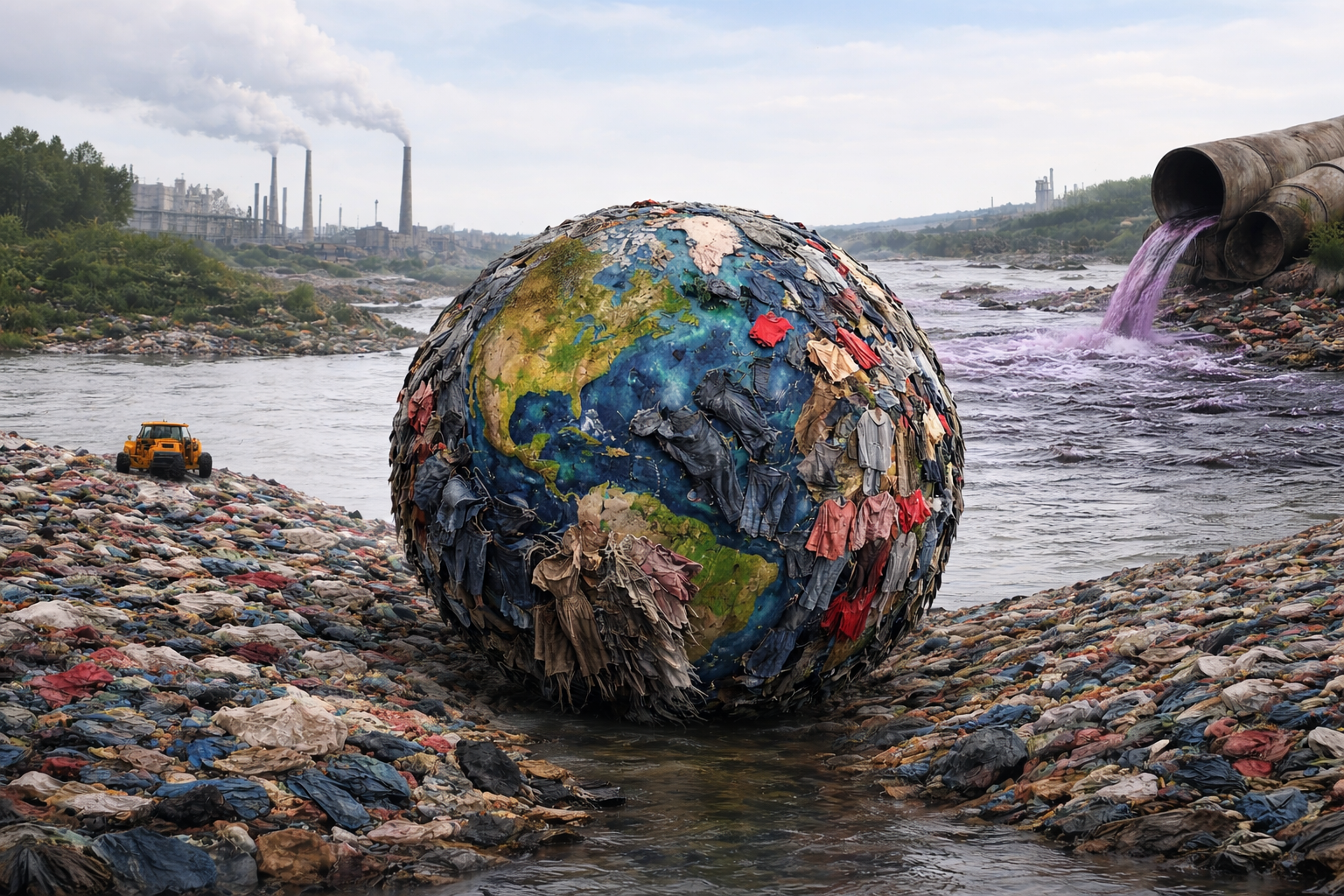
"Trends change so quickly it's cool to see new products and style is always changing and so I want to keep up."
"I usually just go to the stores I know or are close by because I don't have the time and it's easier than searching for better quality."
"I will buy lower quality, cheap clothes if they're trendy because I know they will go out of style soon."
[ Challenge ]
How might we empower consumers with the knowledge and tools to make sustainable fashion choices?
Key research insights:
/ 01 Trend-driven consumption The rapid pace of fashion trends pushes consumers to continuously buy new. Staying current feels more urgent than shopping sustainably.
/ 02 Balancing cost and quality Consumers are willing to invest in timeless pieces but accept lower quality for trendy, inexpensive items. Price remains a primary driver.
/ 03 Convenience drives behavior Even consumers who want to donate or resell often default to fast fashion because sustainable options feel harder and more time-consuming.
/ 04 Demand for a single platform No existing platform combines sustainable discovery, reselling, and donation in one place. That gap is the opportunity.
[ ideation ]
Translated research themes into personas and explored solutions through storyboards.
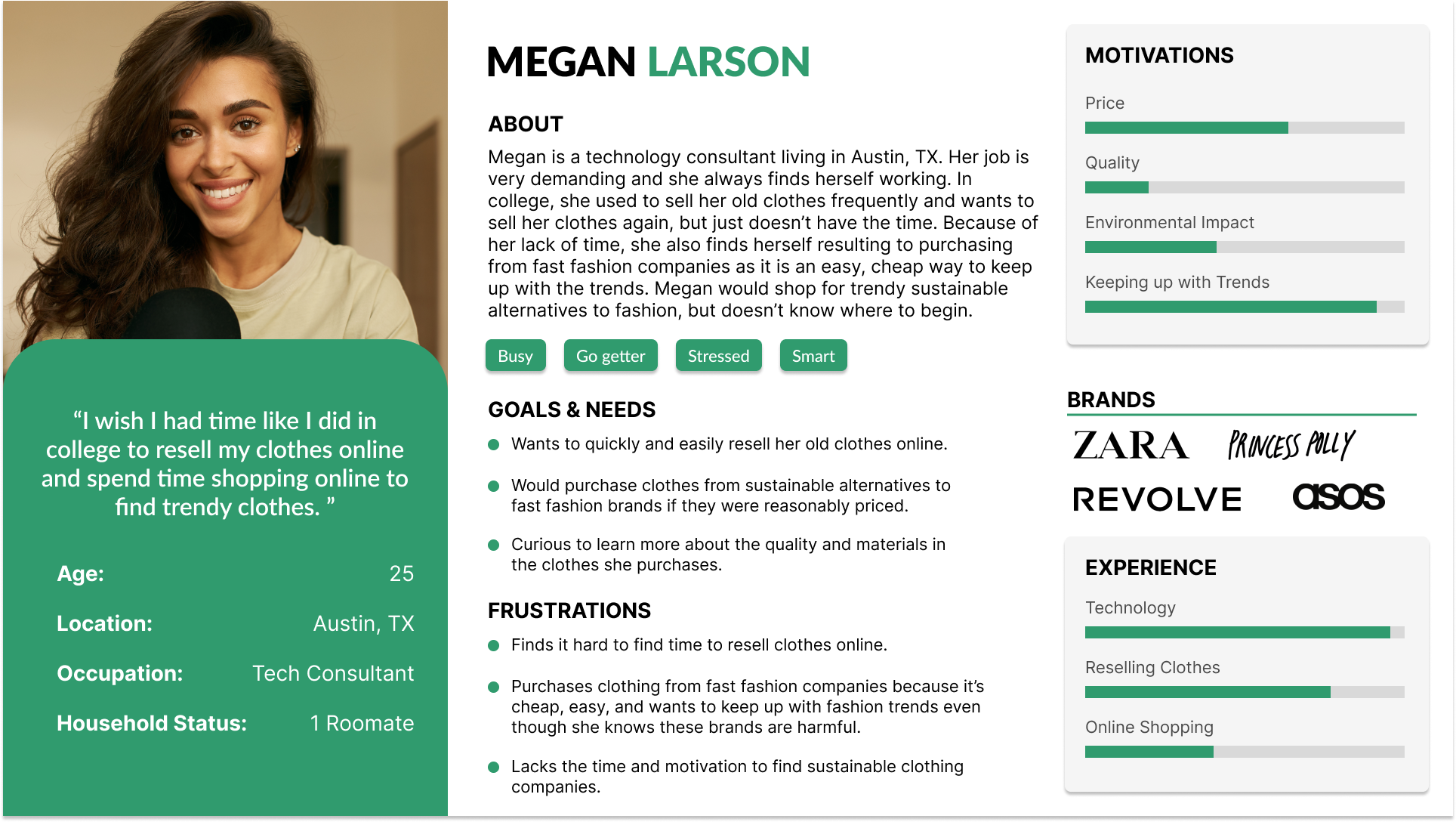
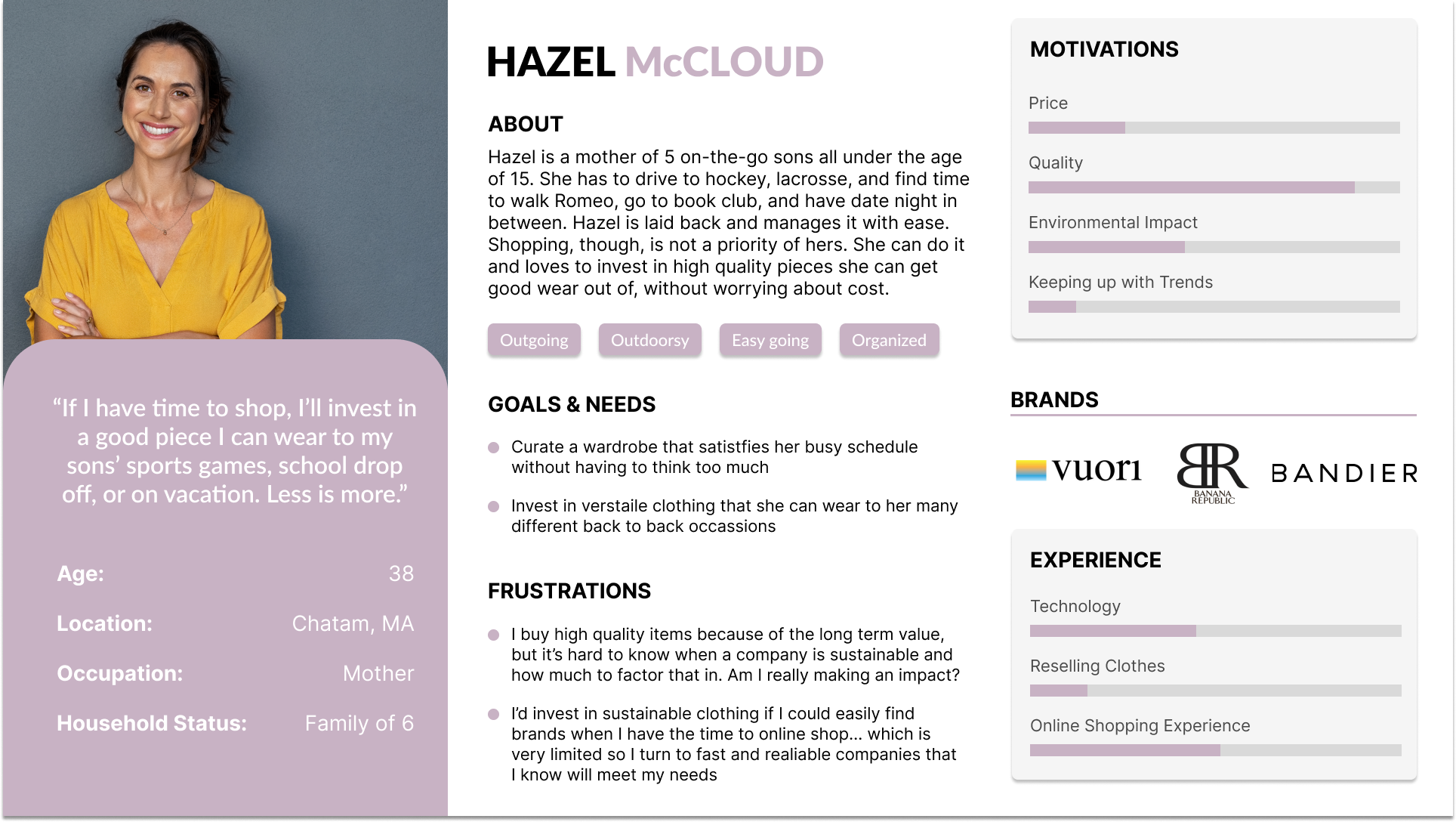
Four key themes from research informed four distinct personas, each representing different motivations, frustrations, and relationships with sustainable fashion.
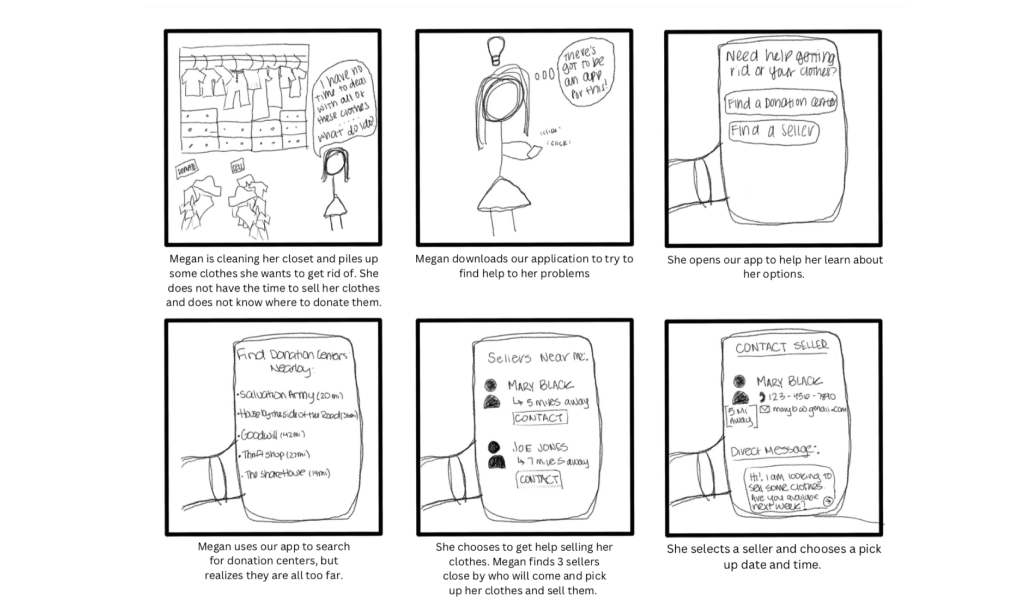
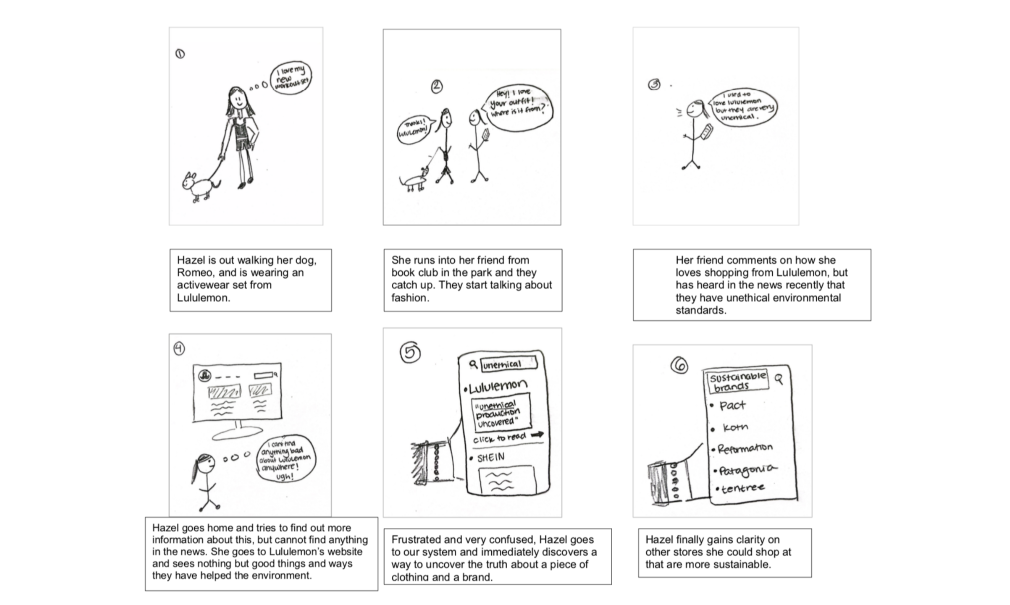
After a series of sketching, we developed storyboards for two primary personas for each  target audience group.
These focused on addressing two critical pain points: streamlining the donation and reselling process and easing the discovery of sustainable alternatives to fast fashion brands.
Storyboard 1
Storyboard 2

Click to enlarge

1 / 2
[ User Flows ]
Mapped the optimal path through the core user journeys.
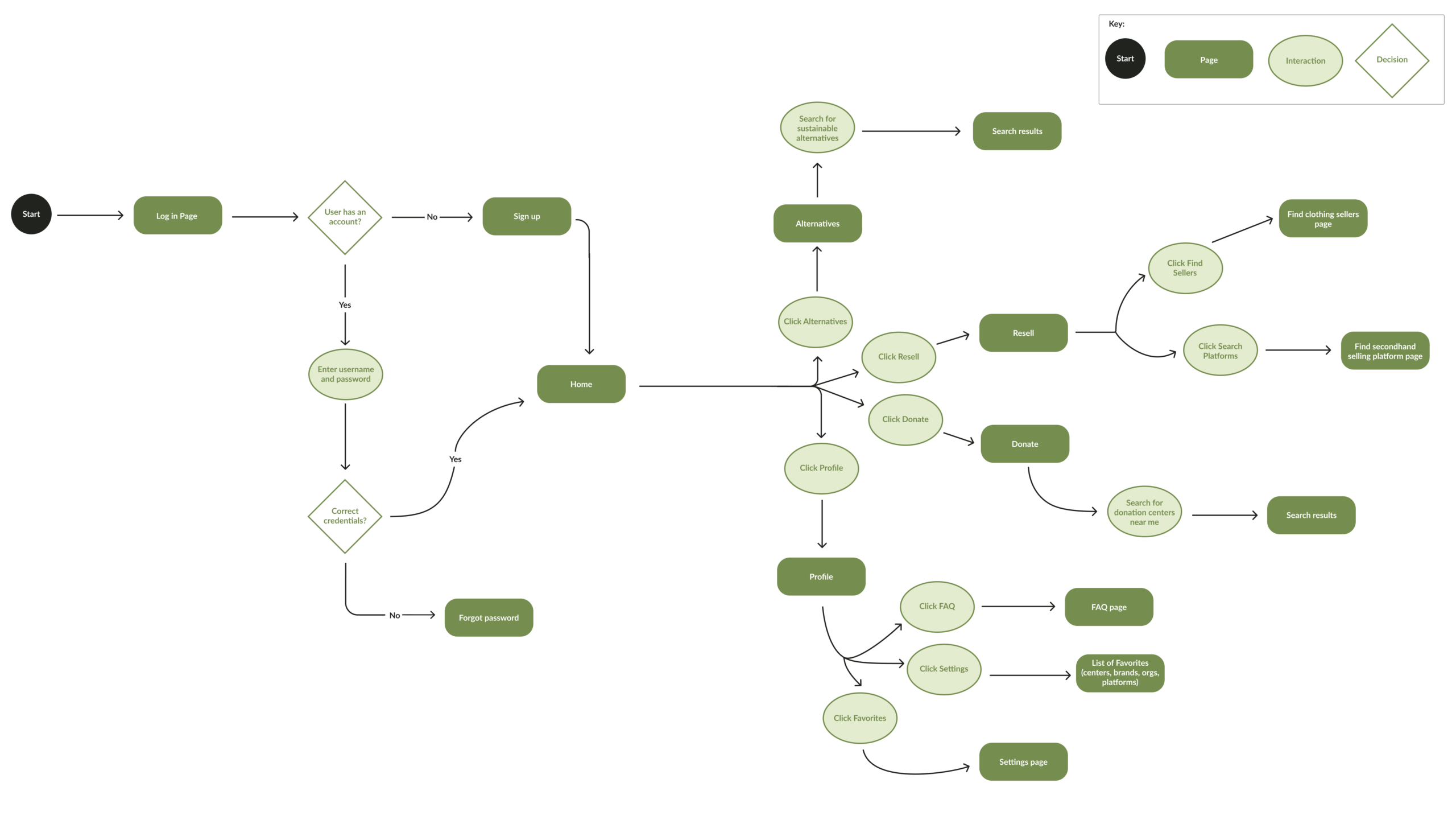
Expanding on our ideation phase, we collaborated on creating a comprehensive user flow diagram to visualize the optimal user experience and identify key features and actions needed to effectively solve the defined problem.
User flow diagram

Click to enlarge

User flow diagram
[ interaction Design ]
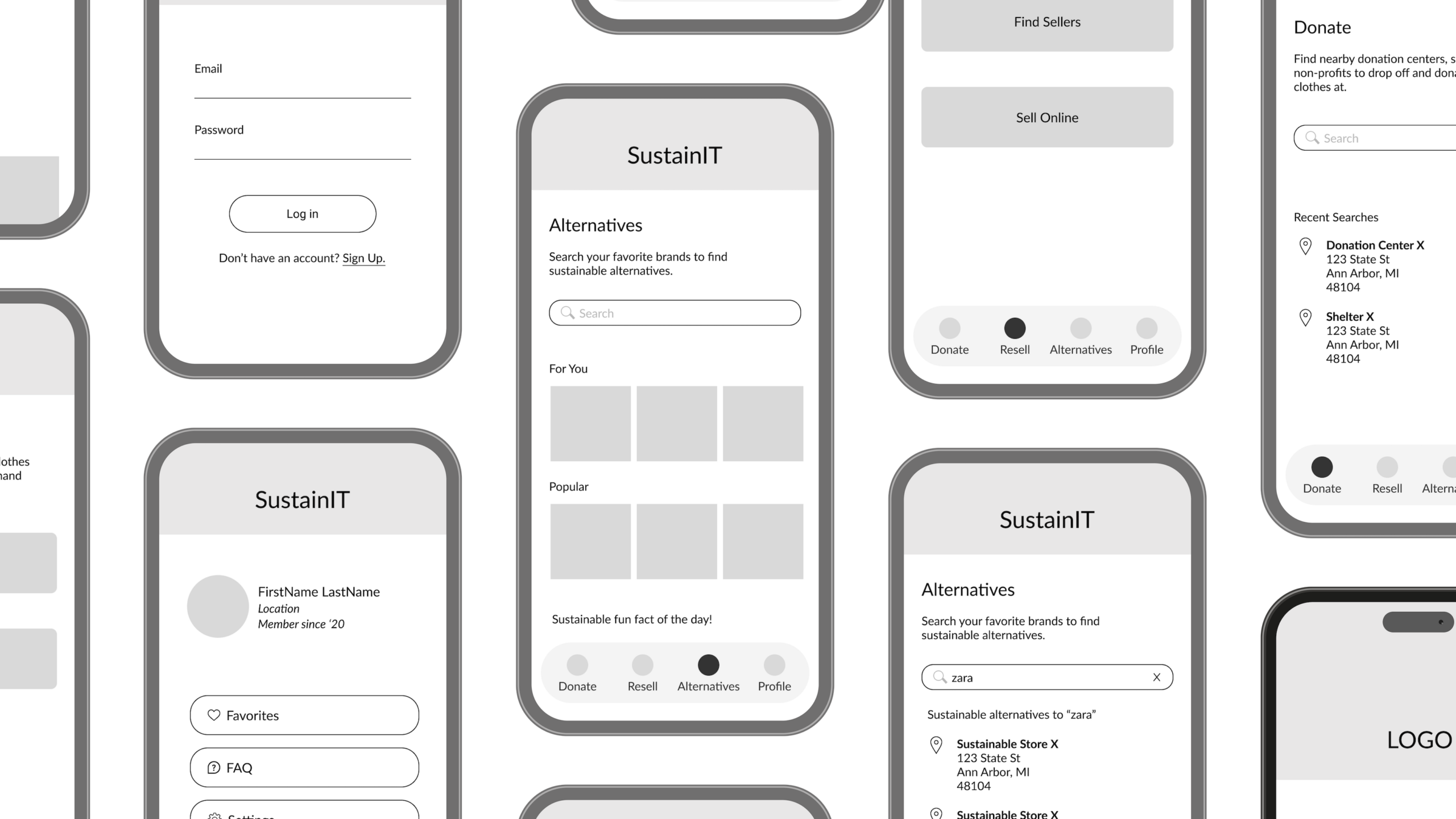
Translated the user flow into mid-fidelity wireframes focused on usability and content organization.
[ Usability Testing ]
Iterative refinement through prototyping.
/ 01

Streamlined navigation

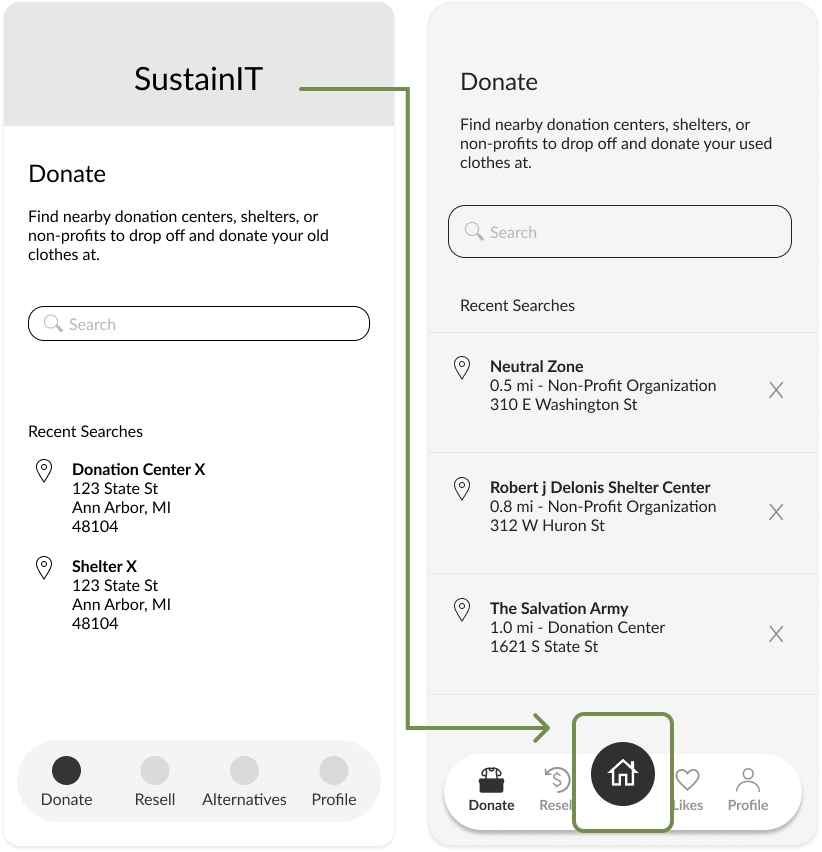
Users struggled to return to the homepage and felt the header took up too much screen space. We removed the fixed header and integrated a prominent home button into the navigation menu.
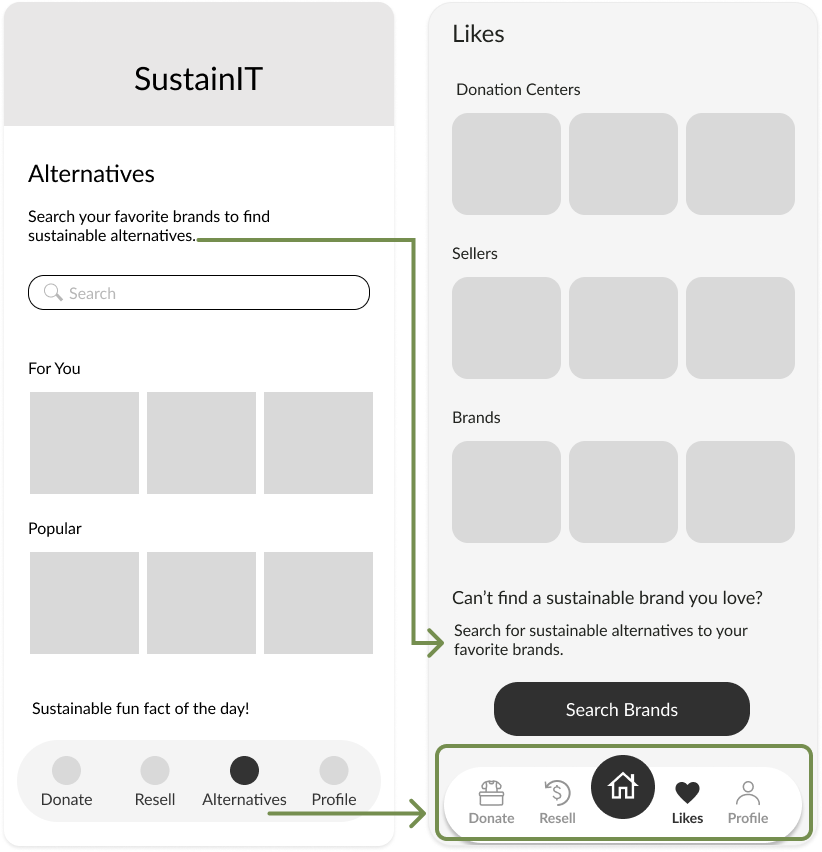
Navigation update

Click to enlarge

/ 02

Clarifying the alternatives feature

The label "Alternatives" in the main navigation caused confusion. We relocated the feature to the Shop section and renamed it Likes, making it a more intuitive part of the personalized experience.

Alternatives feature update

Click to enlarge

[ Final design ]
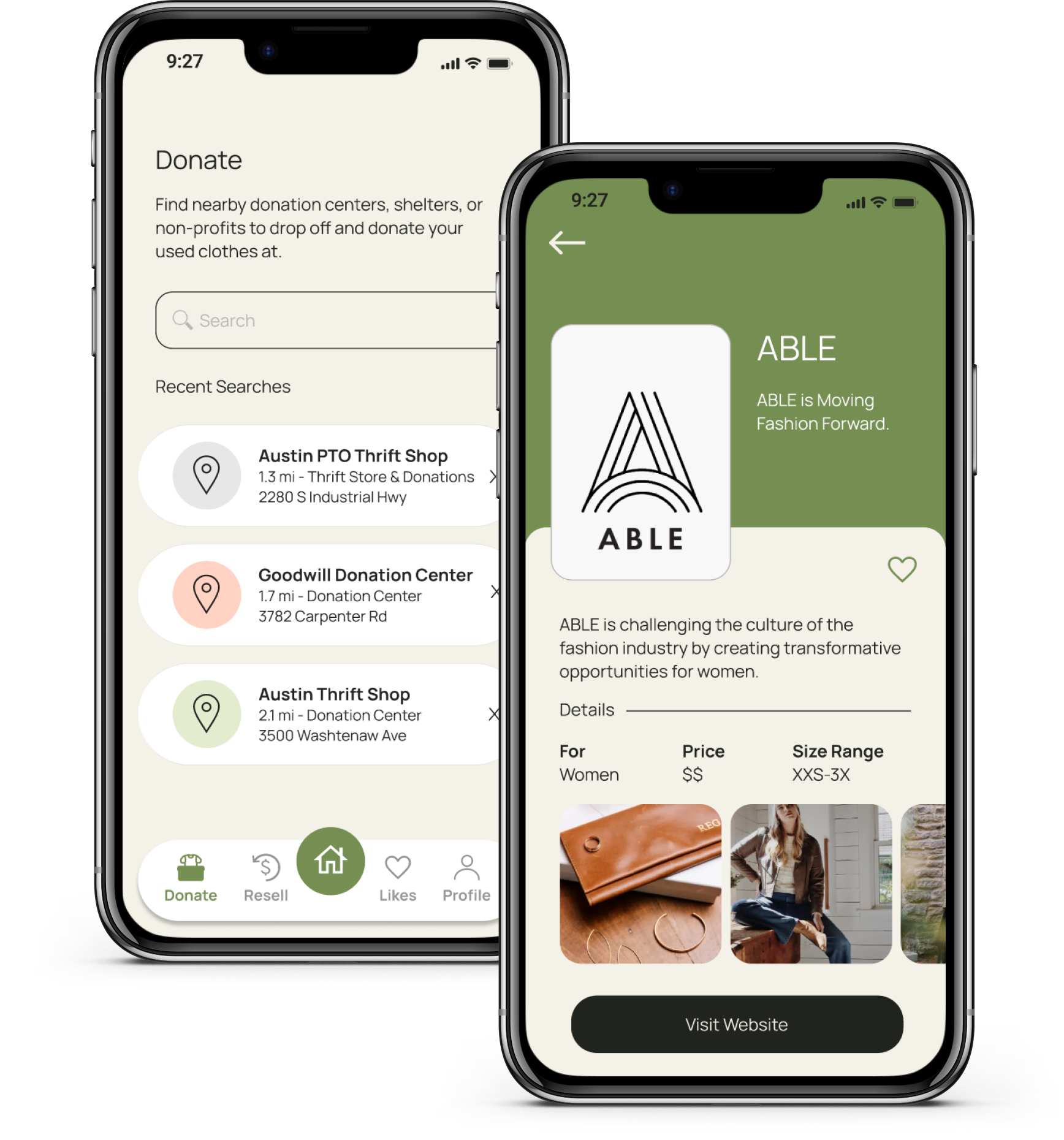
Four key features address the barriers to sustainable shopping.
/ 01

Seamless reselling

Users can easily connect with nearby sellers or explore online resale platforms, streamlining the secondhand selling process.

/ 02

Sustainable brand discovery

Users can discover eco-friendly alternatives to their favorite brands, making sustainable switching feel easy and relevant.

/ 03

Convenient donation

Users can find nearby donation centers, shelters, and non-profits to drop off used clothing which removes the friction from doing something good.

/ 04

Personalized experience

Users select preferences on setup to receive curated, tailored guidance for sustainable shopping that fits their lifestyle.

Takeaways
Validate before you design Early interviews surfaced assumptions we would have built into the product without questioning. The competitive analysis also revealed a market gap we hadn't expected which shaped the entire concept.
Convenience is the real competitor Fast fashion wins because it's easy, and every design decision had to be evaluated against that. If SustainIt wasn't meaningfully faster or simpler than the standard, users would default back to what they knew.
Rename before you redesign The "Alternatives" navigation issue taught me that language problems often look like UX problems. Before changing a layout or flow, it's worth asking whether the confusion is in the words rather than the structure.
Team research needs a shared framework With five researchers conducting interviews, synthesizing insights consistently was harder than expected. Establishing a shared tagging and affinity system earlier would have saved significant time during analysis.
Home

All Work

See more
projects

© 2026 Logan Hanekamp.
crossmenuchevron-down